The Path of Civilization Leap
Follow the causal chain from real-world problems into the whole system.
These verified English diagrams preserve the historical terminology and reading paths of P01-MAPS-001 V2.0. Their older wording and book titles do not replace the current formulation, “self-interest with others first,” the confirmed R10.10 collected master, or current Living Civilization titles. The current navigation links below remain separate from the historical diagrams.
The three diagrams support first discovery, overall understanding, and continued reading. The path view explains why the argument leads step by step to Civilization Leap; the panoramic view shows the full extent of the system once you arrive. The diagrams are entry points; family pages and individual explanatory pages develop the specific theories, boundaries, practical foundations, and downloads.
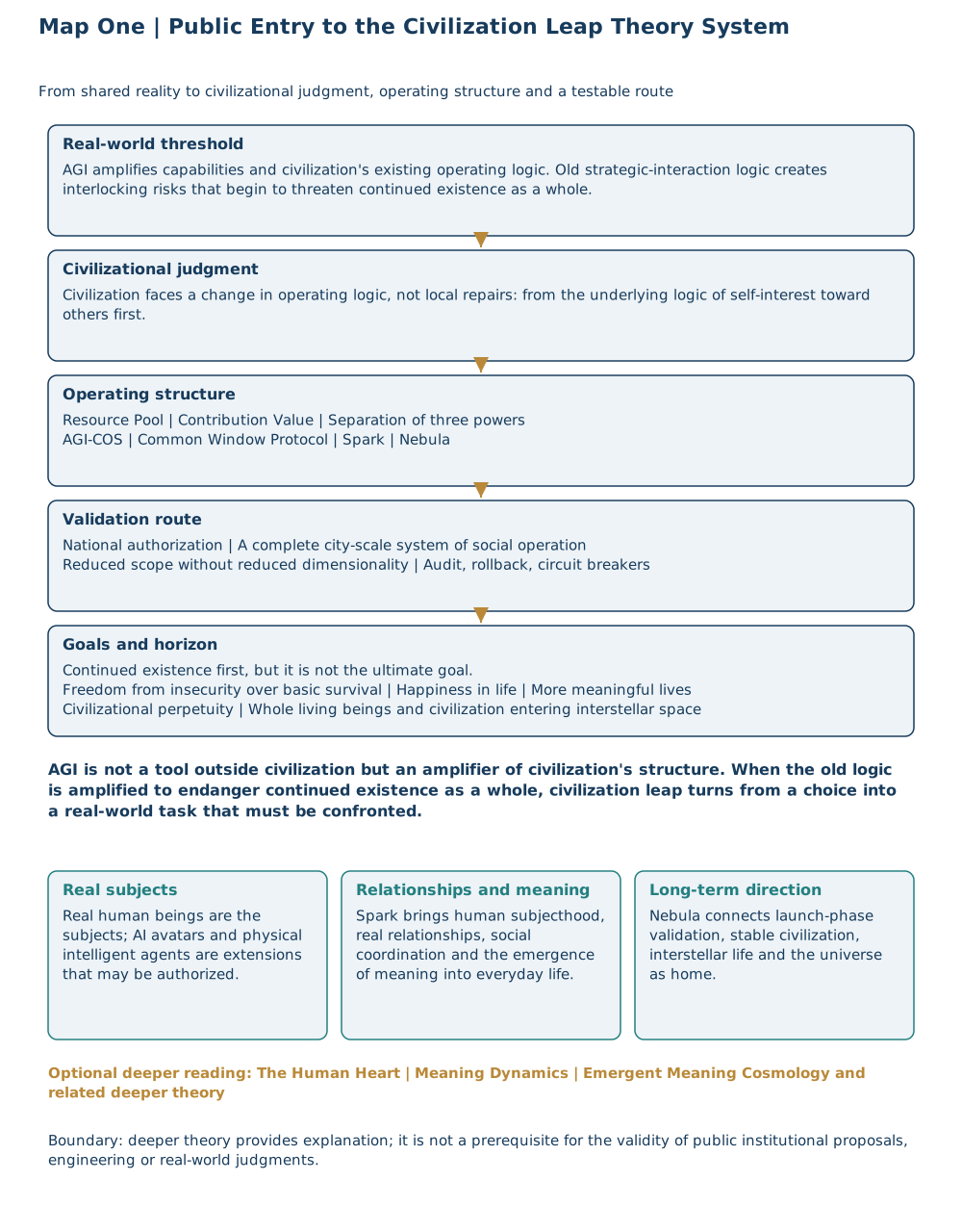
The overall diagram shows relationships; the nodes below lead to the corresponding pages.
Follow the causal chain from real-world problems into the whole system.
If you are new to the system, start with public questions and lived experience.
Approach civilizational choice through the AI changes taking place today.
Explore judgment, responsibility, and windows for correction before irreversible outcomes.
Enter the controlled version family by stage, phase, task, and authority.
Continue with how a future civilization can actually operate and be lived.
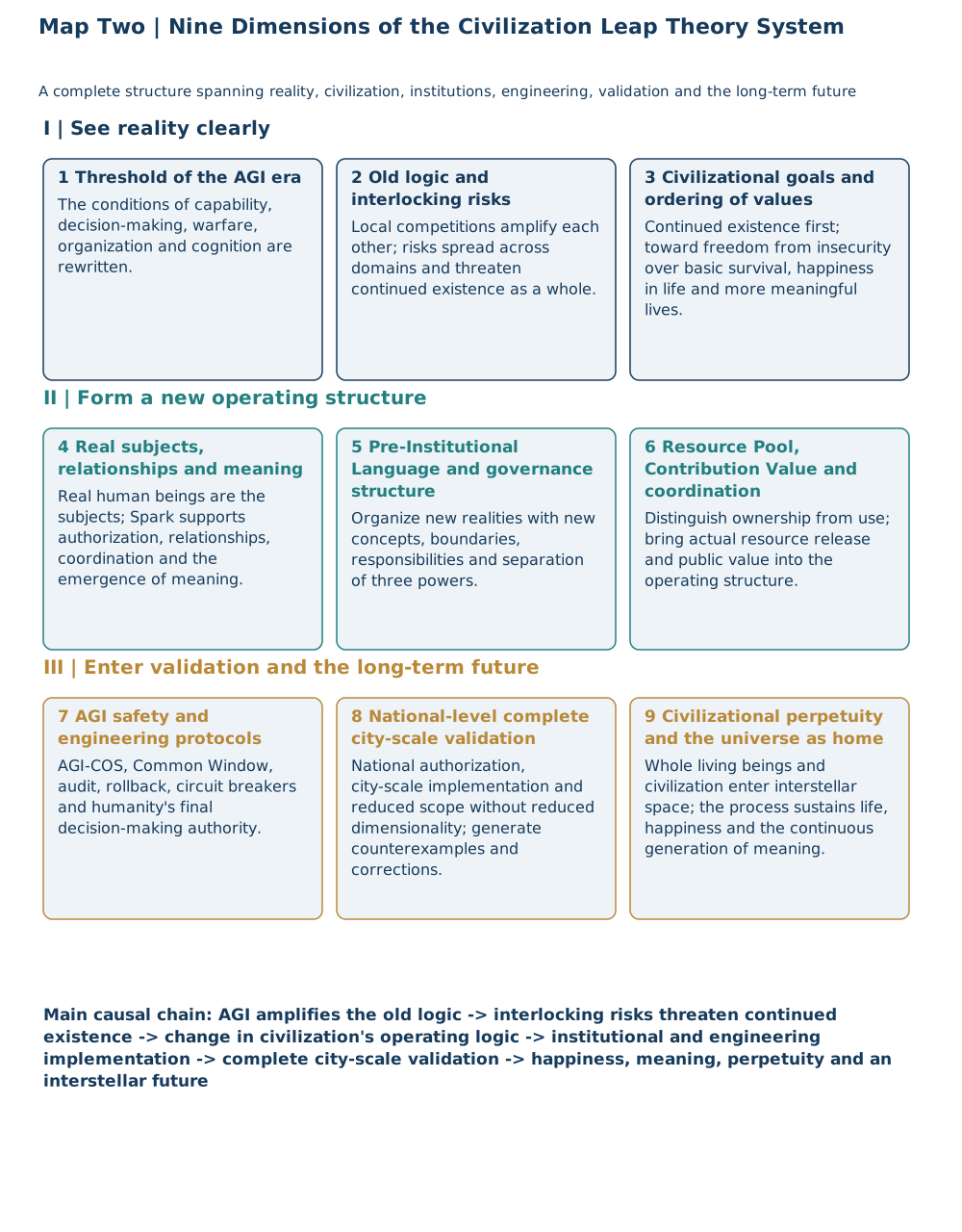
The overall diagram shows relationships; the nodes below lead to the corresponding pages.
The theoretical backbone: why change, what to change, and how to establish long-term civilizational boundaries.
Place civilizational structures back within ordinary people's work, families, choices, and shared lives.
Human judgment, responsibility, and the window before irreversibility.
Machine-side risks, authority, and controlled version families organized by stage.
Explore open research on multiple actors' interests, negotiation, trust, and irreversible risk.
Find current public works, versions, explanations, and downloads.
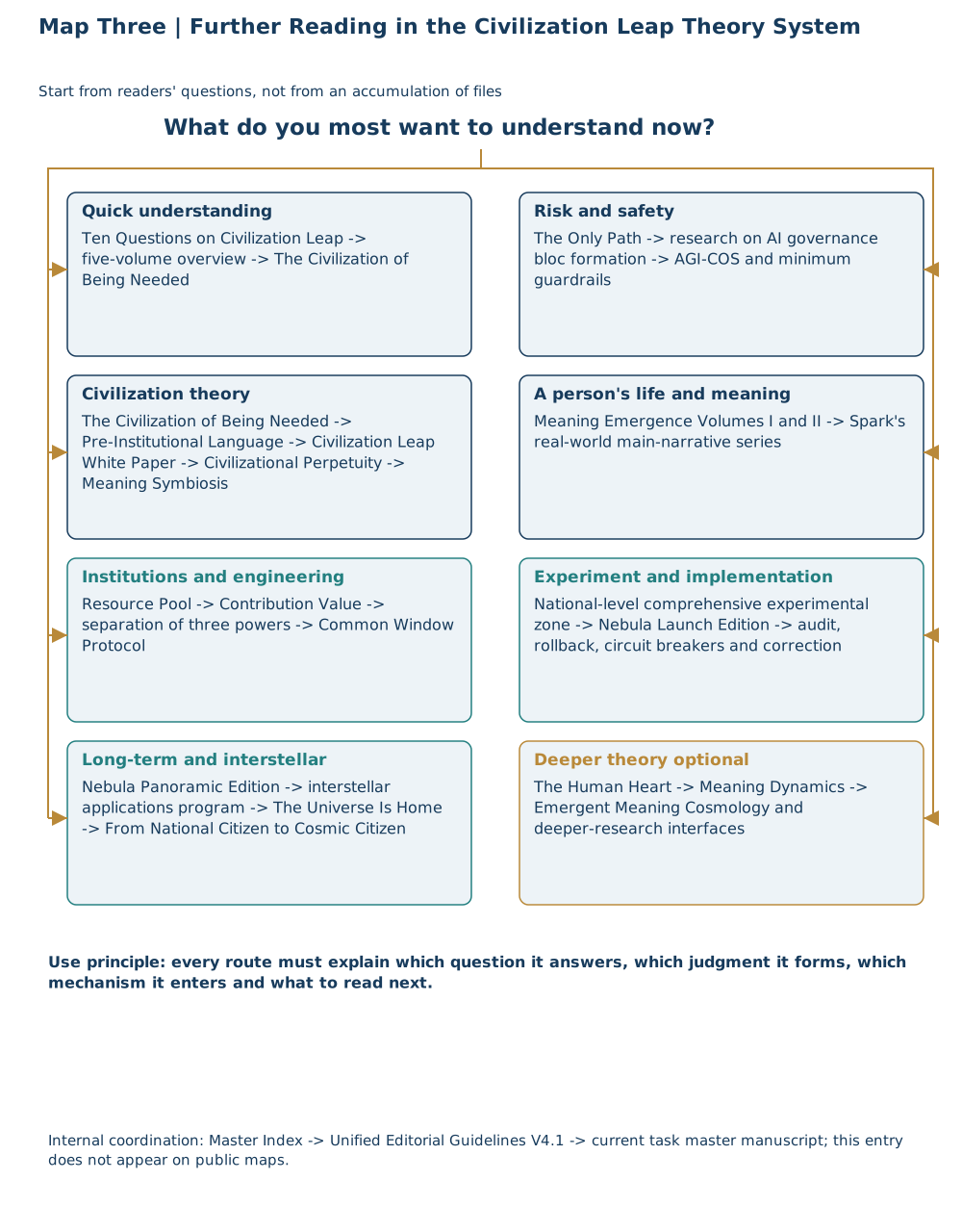
The overall diagram shows relationships; the nodes below lead to the corresponding pages.
Start with questions closest to ordinary readers.
Explore interdisciplinary papers, structural explanations, and research participation.
Find an entry point as a member of the public, researcher, decision-maker, or another reader.
Continue by problem domain, including AI governance, future life, and institutions.
Return to the three diagrams and overall structure.
Find public assets and downloads directly.
The system retains long-term and interstellar directions so that immediate realities do not close off the future. Current communication, public understanding, and practical judgment do not depend on mature interstellar proposals. The closer a proposal comes to implementation, the more it requires evidence, responsibility, exit, and rollback. The closer it lies to the very long-term future, the more clearly its research or visionary status must be marked.
M1→M8 preserves the process through which the theory forms: starting from present crises and changing capabilities, moving through human value, purpose generation, institutions, validation, and future life, and finally returning to why civilization is worth continuing. The panorama does not invent new branches; it places existing theoretical bodies, problem domains, foundational capabilities, and practical foundations within one map of relationships.
Continued existence as the baseline → secure basic living conditions → happiness in life → lives richer in meaning. An open future and the ability to choose again run throughout.
View M8: What is it ultimately for?The five-volume work asks why change is necessary and which boundaries must hold. Living Civilization asks how a future civilization operates, how people live in it, and how it comes into being.
Explore how a future civilization operates and how people liveThe following research and engineering already serve clear purposes in high-consequence questions such as continued existence and AGI governance. They also provide foundations for future Spark, Nebula, and wider civilizational operation. Their present use does not determine their permanent institutional home.
Make subjects, relationships, interests at stake, consequences, unknowns, and responsibility visible earlier. It currently serves high-consequence judgment; in the future, it may also support Nebula's public judgment and necessary high-consequence situations within Spark.
Place competition, cooperation, interests, costs, third parties, and unknowns within a comparable structure. It serves research on real strategic interactions and may also become a foundational capability for Nebula's public cooperation and institutional formation.
Investigate why objectives hold and how they are retained, revised, cancelled, replaced, and reopened. This connects autonomous AGI objectives with purpose generation in future long-term human–AI and AI–AI relationships.
Currently addresses crisis operations, perception auditing, high-consequence permissions, and boundaries that permit rollback. Over time, it may develop further into a foundation for civilizational immunity and coordination in human–AGI–AGI relationships.
Identify whether channels for correction, exit, refusal, recovery, and choosing again are being structurally closed. As a cross-cutting baseline criterion, it can apply to institutions, platforms, and future public structures.
Spark supports the extension of human capabilities, the reach of care, and real responses. Nebula supports public cooperation, judgment among multiple subjects, and civilizational operation. They are not downstream of safety tools; they are important foundations for future civilizational life and public operation.
This is an open research undertaking within how to make the leap. It does not require every subject to abandon self-interest first. Instead, it compares the real consequences of cooperation, non-cooperation, competition, and coordination, making burdens on third parties, constraints, unknowns, and irreversible risks visible earlier.
Research project entry point: purpose, methods, applications, current boundaries, and global open-source implementation.
Enter the research projectAn introductory reflection: from making interests visible and comparing choices to enabling cooperation to generate verifiable trust.
Read the introductory reflectionThis page translates the complete existing public HTML text. Linked works and files retain their own publication and version boundaries; unavailable English materials are marked explicitly.